

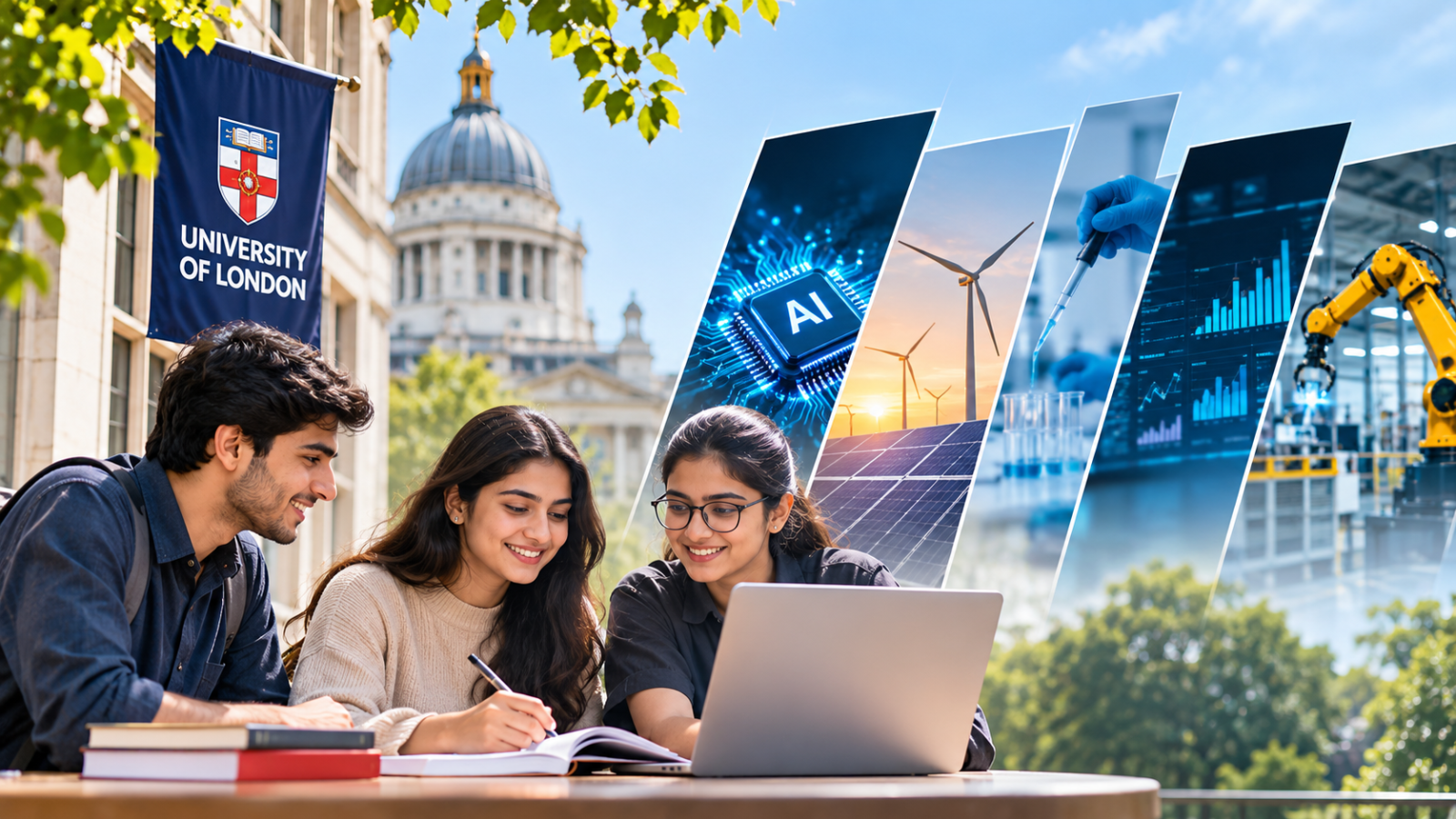
The global job market is evolving rapidly as technological advancements, digital transformation, and changing business models reshape industries. Careers that barely existed a decade ago are becoming increasingly important, while traditional professions are adapting to new technologies and workplace expectations. For students preparing to enter higher education, choosing a degree that develops relevant knowledge, adaptability, and practical skills has never been more important.
International education can play a valuable role in preparing students for these changes. The University of London, known for its academic heritage and international education programmes, offers students opportunities to develop critical thinking, independent learning, and analytical abilities that remain valuable across different professional fields.
For Pakistani students, pursuing internationally focused higher education through institutions such as Beaconhouse International College (BIC) can provide access to academic pathways designed to support their educational and professional ambitions. Understanding how international education prepares students for emerging industries can help them make informed decisions about their futures.
Understanding the Changing Global Job Market
The modern workplace looks significantly different from what it did just a few years ago. Artificial Intelligence, automation, digital communication, and data-driven decision-making are transforming how organisations operate.
Industries are increasingly seeking professionals who can combine specialised knowledge with transferable skills such as communication, analytical thinking, creativity, and adaptability.
Some of the emerging and rapidly evolving professional areas include:
-
Artificial Intelligence and Machine Learning
-
Data Science and Business Analytics
-
Cybersecurity and Digital Infrastructure
-
Financial Technology (FinTech)
-
Digital Marketing and E-Commerce
-
Behavioural Science and User Experience
-
Sustainable Business and Environmental Management
-
Technology Consulting and Digital Transformation
These developments demonstrate why students need an education that prepares them not only for existing jobs but also for opportunities that may emerge throughout their careers.
The Importance of International Education in Emerging Industries
International education exposes students to academic frameworks, learning approaches, and perspectives that can support their development in an increasingly interconnected world.
University of London programmes are designed around established academic standards, with academic direction provided by relevant University of London federation members or other designated academic partners, depending on the programme.
Students are encouraged to develop subject knowledge alongside independent research, critical evaluation, and structured problem-solving.
These abilities are particularly relevant to emerging industries, where professionals must frequently evaluate unfamiliar challenges, interpret new information, and adapt to changing technologies.
For Pakistani students, international education can provide an opportunity to engage with globally oriented academic content while developing the confidence to explore opportunities in different professional environments.
How Artificial Intelligence Is Creating New Career Opportunities
Artificial Intelligence is becoming an important part of modern business operations, healthcare, education, finance, and technology. Organisations increasingly use AI-powered systems to analyse information, automate processes, and improve decision-making.
As these technologies develop, demand for professionals who understand AI concepts, data analysis, programming, and responsible technology use is expected to remain an important consideration for employers.
Students interested in technology-driven careers can explore programmes such as BSc Artificial Intelligence at BIC.
Studying Artificial Intelligence can introduce students to areas such as machine learning, algorithms, data processing, and computational problem-solving, depending on the curriculum.
Potential career pathways include AI development, data analysis, machine learning engineering, and technology consulting. Some specialist positions may require further training, practical experience, or postgraduate qualifications.
Computer Science and the Future of Digital Industries
Digital technologies are essential to almost every major industry. From online banking and healthcare platforms to e-commerce and cloud computing, organisations depend on computer systems to deliver services and manage operations.
As digital infrastructure expands, professionals with strong technical knowledge and problem-solving abilities will continue to play an important role.
A BSc Computer Science can provide a foundation in programming, software development, computing principles, and technical problem-solving.
Students interested in emerging digital industries may explore careers in:
-
Software Development
-
Cybersecurity
-
Cloud Computing
-
Data Engineering
-
Systems Analysis
-
Mobile Application Development
-
Technology Consulting
Computer Science also encourages logical thinking and independent problem-solving, helping graduates adapt as programming languages, software tools, and technologies evolve.
Business Administration in a Technology-Driven Economy
Technology is not only changing technical professions. It is also transforming how businesses develop strategies, interact with customers, manage employees, and compete in international markets.
Modern business professionals must understand digital communication, customer analytics, financial planning, innovation, and organisational management.
Students pursuing Business Administration can develop knowledge of management, marketing, operations, entrepreneurship, and strategic decision-making.
These skills can support career opportunities in emerging areas such as digital business development, e-commerce management, technology entrepreneurship, and business analytics.
For students interested in leadership roles, combining business knowledge with digital literacy can be particularly valuable in organisations undergoing technological transformation.
The Growing Importance of Accounting and Finance in FinTech
The financial services industry is experiencing significant technological change. Digital banking, mobile payments, automated financial reporting, and financial analytics are reshaping traditional accounting and finance functions.
Financial Technology, commonly known as FinTech, combines financial services with digital innovation to improve accessibility, efficiency, and customer experiences.
Students interested in this evolving industry can explore Accounting & Finance programmes that provide a foundation in financial reporting, accounting principles, business finance, and analytical reasoning.
As technology becomes increasingly integrated into financial operations, graduates who understand both financial concepts and digital tools may find opportunities in financial analysis, risk management, digital banking, and financial technology organisations.
Developing familiarity with data analysis and financial software can further strengthen professional readiness.
Psychology and Emerging Careers in Human Behaviour
Technology-driven industries increasingly recognise the importance of understanding human behaviour. Businesses need to know how customers make decisions, how employees respond to workplace changes, and how people interact with digital products.
Psychology provides valuable insights into cognition, motivation, decision-making, communication, and social behaviour.
Students pursuing BSc Psychology can develop an understanding of human behaviour while strengthening research, observation, and analytical skills.
These abilities may be relevant to emerging professional areas such as:
-
User Experience (UX) Research
-
Consumer Behaviour Analysis
-
Organisational Development
-
Human Resources
-
Behavioural Research
-
Digital Product Research
-
Workplace Well-being
Some specialised psychology careers, particularly clinical and regulated roles, require additional qualifications, supervised experience, or professional registration.
As businesses become more focused on user-centred technology and employee experiences, understanding human behaviour can complement knowledge in business, design, and technology.
Why Critical Thinking and Analytical Skills Matter
One of the most important qualities employers seek is the ability to approach problems logically and make decisions supported by reliable information.
Emerging industries frequently introduce situations where established solutions may not exist. Professionals must evaluate alternatives, understand risks, and develop practical responses.
International academic programmes, including those offered by the University of London, often emphasise independent study, research, and critical evaluation.
Through academic assignments, assessments, and subject-specific learning, students can develop abilities such as:
-
Evaluating information from different sources
-
Identifying patterns and relationships
-
Understanding complex concepts
-
Developing evidence-based arguments
-
Solving unfamiliar problems
-
Communicating findings clearly
These transferable skills remain useful even when specific technologies or professional practices change.
Developing Adaptability Through Independent Learning
The ability to learn continuously is becoming increasingly important as industries evolve.
Professionals may need to understand new software, adopt different business practices, or acquire additional technical skills throughout their careers.
University education that encourages independent learning can help students become more confident in managing their professional development.
The University of London's international education model places importance on academic responsibility and self-directed study. Students are expected to engage with learning materials, manage their academic progress, and develop a strong understanding of their chosen subjects.
These experiences can support the development of discipline, time management, and adaptability.
For students preparing to enter rapidly changing industries, learning how to acquire new knowledge independently can be just as valuable as mastering a particular subject.
The Value of Interdisciplinary Skills in Future Careers
Many emerging careers combine knowledge from different academic disciplines.
For example, a professional working in financial technology may need to understand both financial systems and software applications. Someone working in digital marketing may benefit from knowledge of business strategy, psychology, and data analysis.
Similarly, professionals involved in Artificial Intelligence development may need to consider technical performance alongside ethical issues, user behaviour, and organisational requirements.
This growing overlap between disciplines highlights the importance of developing complementary skills during university.
Students can strengthen their professional profiles by exploring relevant workshops, certifications, practical projects, internships, and extracurricular learning opportunities.
A strong combination of academic knowledge and transferable skills can help graduates explore a wider range of career pathways.
How Students Can Prepare for Emerging Industries During University
Preparing for future careers should begin well before graduation. Students who actively explore industry developments and gain practical experience can develop a clearer understanding of professional expectations.
Several approaches can help students prepare:
1. Stay informed about industry trends
Follow reliable industry publications, professional organisations, and technology developments related to your chosen field.
2. Develop digital literacy
Learn how to use relevant software, online collaboration tools, research platforms, and data analysis applications.
3. Participate in practical projects
Academic projects, competitions, and independent initiatives provide opportunities to apply theoretical knowledge to realistic challenges.
4. Explore internships and professional experiences
Internships and workplace exposure can help students understand organisational expectations and develop professional confidence.
5. Strengthen communication and teamwork
Emerging industries require professionals who can collaborate across departments and explain complex ideas clearly.
6. Build a professional portfolio
Document academic projects, certifications, achievements, and practical experiences that demonstrate your developing abilities.
7. Continue learning beyond the classroom
Short courses, workshops, professional events, and independent research can help students explore subjects beyond their formal degree curriculum.
By developing these habits early, students can become better prepared for the opportunities and challenges of modern professional environments.
The Role of the University of London in International Higher Education
The University of London has a long-established international education model that allows eligible students around the world to pursue selected academic qualifications without necessarily relocating to the United Kingdom.
Through its network of Recognised Teaching Centres, students may access local teaching support while working towards qualifications awarded by the University of London.
This model can be particularly appealing to Pakistani students who want to pursue international academic opportunities while remaining close to home.
However, students should carefully review the academic structure, entry requirements, assessment methods, and recognition status of their chosen programme.
It is also important to understand that different international programmes may have different awarding institutions and academic arrangements.
Explore International Education Opportunities at Beaconhouse International College
Choosing the right academic institution is an important step towards preparing for emerging industries and future professional opportunities.
Beaconhouse International College (BIC) offers students in Pakistan opportunities to explore internationally focused higher education through academic programmes and international collaborations.
As a University of London Recognised Teaching Centre, BIC provides a pathway for students interested in exploring eligible University of London qualifications, subject to current programme availability and admission requirements.
Students can also explore BIC's wider academic offerings, including Business Administration, Computer Science, Artificial Intelligence, Psychology, and Accounting & Finance.
These academic pathways cover disciplines relevant to evolving industries and offer students opportunities to develop subject knowledge that can support their professional ambitions.
Prospective students should confirm the awarding institution, programme structure, and current admission requirements before enrolling.
Prepare for Tomorrow's Careers with Beaconhouse International College
The future of employment will be shaped by innovation, digital transformation, changing consumer expectations, and the growing importance of interdisciplinary knowledge. Students preparing for this future need more than technical knowledge alone. They also need critical thinking, adaptability, communication, and the ability to continue learning throughout their careers.
A University of London education can help students develop valuable academic and transferable skills through internationally oriented learning, independent study, and subject-specific knowledge.
At Beaconhouse International College, students can explore international education pathways and degree options that align with their interests and future career ambitions.
By choosing an appropriate qualification, developing practical skills, and remaining open to continuous learning, students can build a strong foundation for opportunities in emerging industries both in Pakistan and internationally.