

For a long time, the conversation around education in Pakistan has focused on a single metric: getting kids into classrooms. Today, however, the landscape is shifting in ways that directly impact how students learn, what they achieve, and how they prepare for the future. Whether you are navigating your primary years or looking ahead to university and a career, staying updated on these changes is incredibly important.
The current educational environment is a complex mix of new technologies, ongoing systemic challenges, and evolving demands from the job market. Institutions such as Beaconhouse International College (BIC) are adapting to these changes by focusing on internationally recognised programmes, practical learning, and industry-relevant education that prepares students for future careers.
Let's dive into the major trends shaping education in Pakistan today, and what they mean for students.
Here are some of the major education trends in Pakistan that students should be aware of and should utilise them to their advantage, whether they are looking to enter the workforce right after graduation, or are looking to continue their higher education abroad or conduct research.
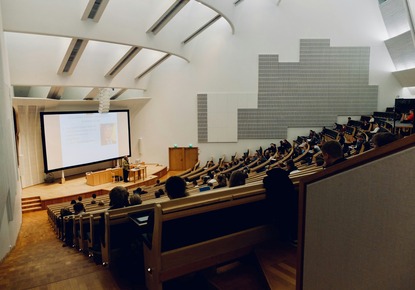
Perhaps the most significant realisation in Pakistan's education sector right now is that sitting in a classroom does not automatically mean a student is learning.
While school enrollment rates have seen promising improvements, a closer look at foundational skills reveals a stark reality often referred to as the learning crisis. Reports consistently show that a large portion of early-grade students struggle with basic reading and arithmetic. Children are moving through the system and advancing to higher grades without truly mastering foundational concepts.
For students, this means that relying entirely on the school curriculum might not be enough. Success in today's environment requires taking ownership of your education, focusing on deep comprehension rather than memorisation, and ensuring you truly understand the basics before moving on.
The national conversation is finally shifting from simply counting how many students are enrolled to asking what they are actually learning. Modern institutions like Beaconhouse International College focus on student-centred learning approaches where students are encouraged to understand concepts, develop critical thinking skills, and apply knowledge practically.
Because traditional classrooms are often under strain sometimes dealing with multi-grade teaching where a single instructor manages several classes at once families and students are finding alternative ways to cope.
This has led to a massive surge in the reliance on supplementary education. Private tuition has become incredibly common for students across both government and private schools. At the same time, the educational technology (EdTech) sector is booming.
Students are increasingly turning to online platforms, video tutorials, and interactive apps to bridge the gaps left by their formal schooling. This hybrid approach to learning is becoming the new normal.
For the modern student, digital literacy is no longer just about using social media; it is about knowing how to leverage online resources to master complex subjects at your own pace.
This growing importance of technology has also increased demand for future-focused degrees such as Artificial Intelligence and Computer Science, where students learn the skills required to participate in the digital economy.
While primary schools see relatively high enrollment, one of the most pressing trends is the steep decline in student retention as they transition into middle and high school.
The journey from basic education to matriculation is fraught with dropouts, often due to economic pressures, lack of nearby secondary schools, or declining interest. This trend highlights a critical bottleneck in the system.
For students currently in middle school, staying the course is a major achievement in itself. It also underscores the importance of resilience and seeking community or digital support when formal schooling becomes difficult to access or afford.
Pakistan has a very young demographic profile, with a large majority of its population under the age of thirty. Yet, unemployment among educated youth remains a significant challenge.
Universities are producing hundreds of thousands of graduates every year, but the job market is not absorbing them efficiently. This disconnect points to a crucial trend: degrees alone are no longer a guaranteed ticket to a job.
The focus is rapidly shifting towards skill development. Aligning higher education with actual labour-market needs is becoming a priority.
For students, this means that alongside pursuing formal qualifications, building practical skills such as critical thinking, digital literacy, communication skills, and technical expertise is absolutely essential for a successful transition into the workforce.
At Beaconhouse International College (BIC), students can pursue career-focused programmes designed around industry requirements, including Business Administration, Computer Science, Artificial Intelligence, Psychology, and Accounting & Finance.
These programmes combine academic knowledge with practical skills, helping students become better prepared for competitive professional environments.
Pakistan's education system is at a critical juncture. It is grappling with deeply rooted inequalities and resource shortages, as seen in the recent sharp declines in public education spending. Yet, it is also a landscape of immense resilience and innovation.
By understanding these trends from the vital importance of foundational learning to the necessity of acquiring practical skills and leveraging digital tools students can better navigate their educational journeys.
The future belongs to those who adapt, seek out knowledge beyond the classroom, and take proactive steps to prepare for a rapidly changing world.
With a focus on internationally recognised qualifications, practical education, and student-centred learning, Beaconhouse International College continues to help students develop the skills, confidence, and knowledge required to succeed in Pakistan and the global professional landscape.